
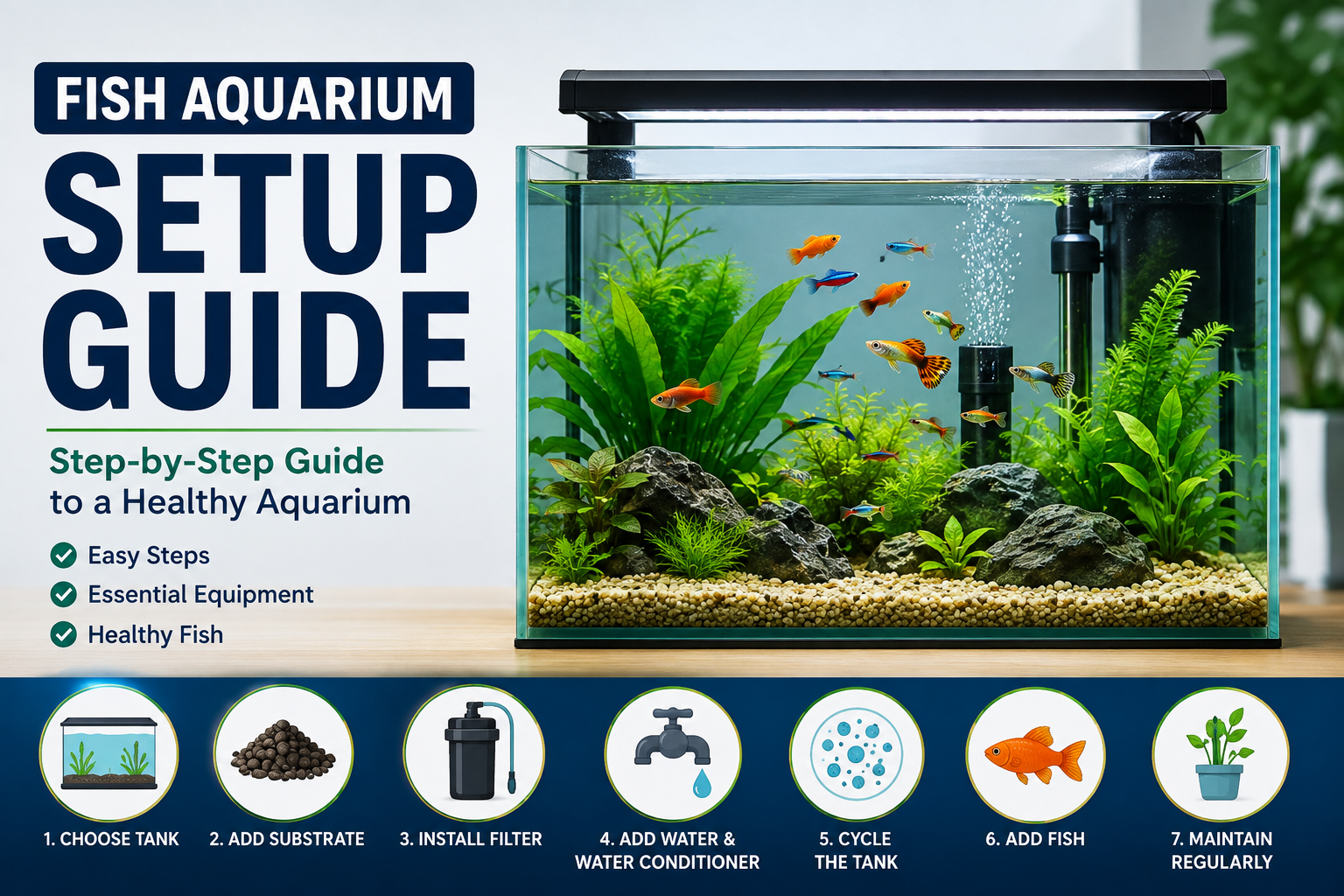
Setting up a fish aquarium for the first time can be exciting, but it can also be confusing. From choosing the right aquarium and filter to adding substrate, plants, decorations, and fish, there are several important steps to follow.
A beautiful aquarium is not just about adding water and fish. A healthy aquarium needs the right equipment, proper water conditions, biological filtration, and regular maintenance.
In this complete fish aquarium setup guide for beginners, we will explain everything you need to know to set up a healthy and attractive freshwater aquarium.
Whether you are planning a small Betta aquarium, a Guppy tank, a community aquarium, or a larger fish tank, these basic steps will help you get started.
What Do You Need for a Fish Aquarium Setup?
Before buying your fish, it is important to prepare all the necessary equipment.
A basic freshwater aquarium setup may include:
- Aquarium tank
- Aquarium stand
- Aquarium filter
- Aquarium heater
- Aquarium light
- Aquarium substrate
- Aquarium plants
- Aquarium decorations
- Water conditioner
- Aquarium thermometer
- Fish food
- Water testing kit
- Fish net
- Algae scraper or glass cleaner
The equipment you need depends on the type and size of aquarium you are setting up.
Step 1: Choose the Right Aquarium Size
The first step is choosing an appropriate aquarium.
Many beginners think that a smaller aquarium is always easier to maintain. However, very small aquariums can actually experience faster changes in water temperature and water quality.
For beginners, a medium-sized aquarium can often be easier to manage than an extremely small tank.
Consider These Factors:
- Type of fish
- Number of fish
- Adult size of the fish
- Available space
- Filtration capacity
- Maintenance requirements
Always research the adult size and requirements of your chosen fish before purchasing them.
Step 2: Choose the Right Location
Where you place your aquarium is very important.
Choose a location that has:
- A strong and level surface
- Easy access to electricity
- Easy access to water for maintenance
- Protection from direct sunlight
- Enough space around the aquarium for cleaning
Avoid Direct Sunlight
Placing an aquarium directly beside a sunny window can cause excessive algae growth and temperature fluctuations.
Also make sure the aquarium stand is designed to safely support the weight of a filled aquarium.
Step 3: Clean the Aquarium
Before adding anything to the tank, clean the aquarium with clean water.
Do not use household detergents, soaps, or chemical cleaners.
Even small amounts of cleaning chemicals can be harmful to fish.
Rinse the aquarium thoroughly and make sure there is no dust or residue left inside.
Step 4: Add Aquarium Substrate
The next step is adding substrate.
Depending on your aquarium style, you can use:
- Aquarium gravel
- Aquarium sand
- Planted tank substrate
- Decorative stones
Substrate provides a natural appearance and can also provide a place for beneficial microorganisms and plant roots.
Important Tip
Rinse gravel or sand thoroughly before adding it to the aquarium to remove dust and debris.
Step 5: Add Aquarium Decorations and Plants
Now you can start designing your aquarium.
You can use:
- Live plants
- Artificial plants
- Driftwood
- Rocks
- Caves
- Aquarium ornaments
Try to create a combination of open swimming areas and hiding places.
Be Careful With Sharp Decorations
Fish with delicate fins, such as Betta fish, can easily damage their fins against sharp decorations.
Always choose aquarium-safe decorations with smooth edges.
Step 6: Install the Aquarium Filter
The aquarium filter is one of the most important pieces of aquarium equipment.
A filter helps with:
Mechanical Filtration
Removes particles and debris from the water.
Biological Filtration
Provides a surface for beneficial bacteria that help process harmful fish waste.
Chemical Filtration
Some filter media can remove specific dissolved substances from aquarium water.
Different aquarium filters are available for different setups.
Common types include:
Choose a filter appropriate for your aquarium size and fish stocking level.
Step 7: Install the Aquarium Heater
Many popular aquarium fish are tropical species and require warm, stable water.
Fish such as:
- Guppies
- Bettas
- Mollies
- Platies
- Neon Tetras
- Many tropical community fish
generally require warmer water than cold-water species.
A reliable aquarium heater can help maintain a stable temperature.
Don’t Forget a Thermometer
A heater may have a temperature setting, but a separate aquarium thermometer allows you to monitor the actual water temperature.
Step 8: Install the Aquarium Light
Aquarium lighting makes your fish and decorations easier to see and is especially important if you keep live plants.
LED aquarium lights are a popular choice because they are energy efficient and available in different sizes and designs.
Avoid leaving the aquarium light on continuously.
A consistent day-and-night lighting schedule is better for the aquarium environment.
Step 9: Add Water
Now slowly add water to the aquarium.
If you already have your substrate and decorations inside the aquarium, pour the water carefully to avoid disturbing them.
A plate, plastic bag, or similar clean surface can be used to disperse the water flow while filling.
Important: Treat Tap Water
Tap water may contain chlorine or chloramine, which can be harmful to fish and beneficial aquarium bacteria.
Use an appropriate aquarium water conditioner according to the product instructions before adding treated water to your aquarium.
Step 10: Start the Filter and Heater
Once the aquarium is filled:
- Turn on the filter.
- Set the heater according to your fish species’ requirements.
- Check the aquarium thermometer.
- Make sure water is circulating properly.
- Check for leaks and unusual equipment noise.
Let the equipment run and make sure everything is working correctly.
Step 11: Cycle Your Aquarium Before Adding Fish
This is one of the most important steps that beginners often skip.
A new aquarium does not immediately have enough beneficial bacteria to safely process fish waste.
The aquarium nitrogen cycle allows beneficial bacteria to establish and convert toxic ammonia into less harmful compounds.
A properly cycled aquarium is much safer for fish.
Why Is Cycling Important?
Fish waste and decomposing organic matter can produce ammonia.
Ammonia is toxic to fish.
Beneficial bacteria help convert:
Ammonia → Nitrite → Nitrate
Nitrate is generally less toxic than ammonia and nitrite, although it should still be controlled through water changes and appropriate aquarium maintenance.
Testing your aquarium water during cycling can help you understand when the aquarium is ready for fish.
Step 12: Test Your Aquarium Water
Before adding fish, test the aquarium water.
Important parameters may include:
- Ammonia
- Nitrite
- Nitrate
- pH
- Temperature
Different fish species have different water requirements, so research the specific species you plan to keep.
Never assume that clear-looking water automatically means the aquarium water is safe.
Step 13: Choose the Right Fish
Once your aquarium is properly prepared and cycled, you can choose your fish.
Some popular beginner-friendly aquarium fish include:
Guppy Fish
Colorful, active, and popular in community aquariums.
Recommended food: A quality Guppy-specific or tropical fish food.
Betta Fish
A beautiful centerpiece fish with flowing fins and many color varieties.
Recommended food: Hikari Betta Bio-Gold is a premium Betta-specific food option.
Platy Fish
Peaceful, colorful, and suitable for many community aquariums.
Recommended food: A quality tropical or community fish food appropriate for their diet.
Molly Fish
Active livebearers available in several colors and varieties.
Recommended food: A balanced tropical fish food suitable for Mollies.
Neon Tetra
Small schooling fish with striking blue and red coloration.
Recommended food: Small-pellet or appropriately sized tropical fish food.
Corydoras Catfish
Peaceful bottom-dwelling fish that are best kept in groups.
Recommended food: A quality sinking food designed for bottom-feeding fish.
Herbivorous Cichlids
African herbivorous cichlids such as Mbuna require a specialized vegetable-based diet.
Recommended food: Hikari Cichlid Excel or Hikari Sinking Cichlid Excel.
Step 14: Acclimate New Fish Properly
Never simply pour newly purchased fish directly into your aquarium.
Fish experience temperature and water chemistry differences when transported.
A gradual acclimation process can help reduce stress.
Basic Acclimation Steps
- Float the unopened fish bag in the aquarium for around 15–20 minutes to help equalize temperature.
- Gradually introduce small amounts of aquarium water into the bag or container.
- Allow the fish time to adjust.
- Gently transfer the fish into the aquarium.
- Avoid adding transport water to the aquarium whenever practical.
Follow any specific acclimation instructions provided by your fish supplier.
Step 15: Don’t Add Too Many Fish at Once
One of the biggest mistakes beginners make is overstocking.
Adding too many fish at once can suddenly increase the amount of waste entering the aquarium.
This can overwhelm the biological filtration system and cause ammonia or nitrite problems.
Start with an appropriate number of fish and increase stocking gradually when the aquarium is stable.
How Much Should You Feed Aquarium Fish?
Overfeeding is another common beginner mistake.
Uneaten food decomposes and can contribute to poor water quality.
Follow These Basic Rules:
- Feed small portions.
- Give fish only what they can consume quickly.
- Avoid feeding more simply because the fish continue looking for food.
- Remove excessive uneaten food when necessary.
- Use food appropriate for the species.
Remember:
More food does not mean healthier fish.
The correct food and correct portion are much more important.
Recommended Aquarium Foods
Different fish have different nutritional requirements.
Choosing species-appropriate food is an important part of aquarium care.
For Betta Fish
Hikari Betta Bio-Gold
A Betta-specific floating pellet designed for Betta fish.
For Herbivorous Cichlids
Hikari Cichlid Excel
A vegetable-based diet formulated for herbivorous cichlids.
For Herbivorous Cichlids That Prefer Sinking Food
Hikari Sinking Cichlid Excel
A sinking option designed for herbivorous cichlids that feed lower in the aquarium.
For Community Fish
Choose appropriately sized tropical or community fish food according to the species you keep.
Aquarium Maintenance After Setup
Setting up the aquarium is only the beginning.
Regular maintenance is essential for keeping fish healthy.
Weekly Maintenance
Depending on your aquarium’s stocking and water test results:
- Perform a partial water change.
- Check the aquarium temperature.
- Check filter operation.
- Inspect fish for signs of illness.
- Clean algae when necessary.
- Test water parameters when appropriate.
- Remove uneaten food and debris.
Avoid completely replacing all aquarium water unless there is a specific emergency or treatment reason.
How to Clean an Aquarium Filter
Do not replace all filter media at the same time unless the manufacturer’s instructions specifically require it.
Filter media contains beneficial bacteria.
When cleaning reusable filter media, rinsing it in removed aquarium water can help preserve beneficial bacteria.
Always follow the instructions for your particular filter and filter media.
Common Fish Aquarium Setup Mistakes
1. Adding Fish Immediately
A brand-new aquarium may not yet have an established biological filtration system.
2. Overfeeding
Excess food can contribute to poor water quality.
3. Overstocking
Too many fish create more waste and can increase stress.
4. Using Untreated Tap Water
Chlorine and chloramine can harm fish and beneficial bacteria.
5. Choosing the Wrong Filter
A filter should be suitable for the aquarium size and fish you keep.
6. Ignoring Water Parameters
Fish can become stressed even when aquarium water looks clean.
7. Cleaning Everything Too Aggressively
Over-cleaning can remove beneficial bacteria from your aquarium.
8. Buying Fish Without Checking Compatibility
Different species have different temperature, water chemistry, diet, size, and temperament requirements.
How to Set Up a Healthy Community Aquarium
If you want to keep multiple fish species together, compatibility is extremely important.
Before purchasing any fish, check:
- Adult size
- Temperature requirements
- pH and water requirements
- Temperament
- Schooling requirements
- Feeding behavior
- Swimming level
- Compatibility with existing fish
A beautiful community aquarium is not simply about putting many colorful fish together.
The goal is to create a stable environment where all species can live comfortably.
Simple Fish Aquarium Setup Checklist
Before adding fish, make sure you have:
☑️ Suitable aquarium
☑️ Strong and stable aquarium stand
☑️ Appropriate filter
☑️ Aquarium heater if required
☑️ Thermometer
☑️ Aquarium light
☑️ Suitable substrate
☑️ Safe decorations and plants
☑️ Water conditioner
☑️ Fish food
☑️ Water testing kit
☑️ Properly cycled aquarium
Once everything is ready, you can begin stocking your aquarium carefully.
Final Thoughts
Setting up a fish aquarium correctly from the beginning can save you from many common problems later.
The most important things to remember are:
- Choose the right aquarium size.
- Select compatible fish.
- Use proper filtration.
- Maintain stable temperature.
- Treat tap water.
- Cycle the aquarium before adding fish.
- Test water regularly.
- Avoid overfeeding.
- Avoid overstocking.
- Feed your fish a species-appropriate diet.
- Perform regular aquarium maintenance.
Whether you are keeping Guppies, Bettas, Tetras, Goldfish, Corydoras, Mollies, Platies, or Herbivorous Cichlids, proper aquarium care is the foundation of healthy fish.
For aquarium filters, heaters, fish food, aquarium cleaning tools, decorations, and other aquarium essentials, explore the products available at AquariaMart.com.
Healthy Fish Start with the Right Care.
Frequently Asked Questions About Fish Aquarium Setup
How do I set up a fish aquarium for beginners?
Choose a suitable aquarium, install the filter and heater if required, add substrate and decorations, fill the tank with conditioned water, establish the nitrogen cycle, test the water, and only then gradually introduce compatible fish.
How long should I wait before adding fish to a new aquarium?
Do not rely only on a fixed number of days. A new aquarium should be properly cycled and water parameters should indicate that the aquarium can safely process fish waste before fish are added.
Do I need a filter in my fish aquarium?
A properly sized filter is strongly recommended for most home aquariums because it supports mechanical and biological filtration and helps maintain water quality.
Do all aquarium fish need a heater?
No. Heating requirements depend on the species. Tropical fish generally require warmer, stable water, while some cold-water species have different requirements.
How often should I change aquarium water?
A regular partial water-change routine is important. For many established aquariums, weekly partial water changes are a useful starting point, but the ideal schedule depends on stocking, feeding, filtration, and water test results.
What is the best food for aquarium fish?
There is no single best food for every fish. Choose food according to the species and its nutritional requirements. For example, Betta fish can be fed a quality Betta-specific food such as Hikari Betta Bio-Gold, while Herbivorous Cichlids can benefit from specialized foods such as Hikari Cichlid Excel and Hikari Sinking Cichlid Excel.
Can I put different fish species together?
Yes, many species can be kept in community aquariums, but compatibility must be checked before adding any fish. Consider temperament, adult size, water requirements, temperature, diet, and schooling behavior.