
Keep Your Frontosa Happy and Healthy! 🐟
Give your Frontosa Cichlids the care they deserve with quality aquarium products from AquariaMart. Order today and enjoy Cash on Delivery all over Pakistan!
Introduction to Frontosa Cichlids
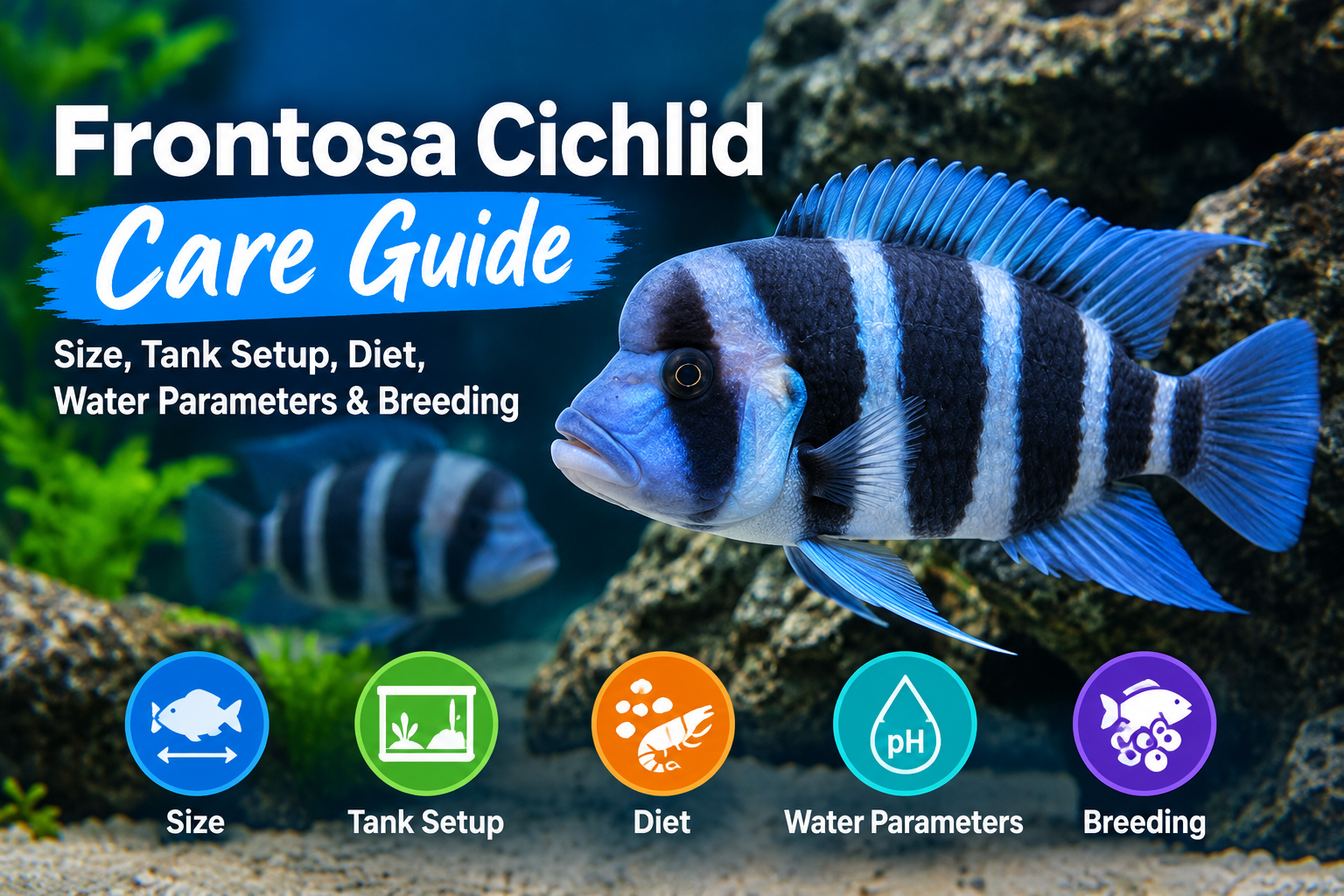
Frontosa Cichlids are among the most beautiful and majestic freshwater fish in the aquarium hobby. Known for their striking blue and black vertical stripes, impressive body size, and distinctive forehead hump, these fish are a favorite among experienced aquarium keepers.
Native to Lake Tanganyika in Africa, Frontosa Cichlids have unique care requirements that make them different from many other African cichlids. They are relatively peaceful, slow-growing fish that can live for 15–20 years in a well-maintained aquarium.
However, their large adult size, specific water requirements, and need for spacious swimming areas mean that proper planning is essential before bringing them home.
In this complete Frontosa Cichlid care guide, we will explore everything you need to know about their size, behavior, tank requirements, feeding, compatible tank mates, and breeding.
1. Natural Habitat and Origin
Frontosa Cichlids originate from Lake Tanganyika, one of Africa’s major Great Lakes. This lake is known for its mineral-rich water, high pH, and remarkable diversity of cichlid species.
In their natural habitat, Frontosa Cichlids are adapted to hard, alkaline water. These conditions should be carefully replicated in the home aquarium to support their long-term health.
There are several geographical varieties and collection locations of Frontosa, each displaying slight differences in coloration and appearance. Despite these variations, most share the characteristic dark vertical bands and blue or silvery body coloration that make them so recognizable.
2. Frontosa Cichlid Size and Growth Rate
Frontosa Cichlids are large fish, and their adult size is an important consideration when planning an aquarium.
- Male size: Approximately 12–15 inches.
- Female size: Approximately 10 inches.
- Lifespan: Around 15–20 years with proper care.
- Growth rate: Relatively slow.
Unlike many smaller aquarium fish, Frontosa Cichlids take several years to reach their full adult size. Their growth rate depends on factors such as genetics, nutrition, water quality, and aquarium conditions.
One of their most recognizable features is the nuchal hump on the forehead. This hump generally becomes much more pronounced in mature males than in females.
Because these fish grow slowly but eventually become very large, aquarists should plan for their adult size instead of choosing a tank based on the size of juveniles.
3. Frontosa Cichlid Temperament and Behavior
Despite their impressive size, Frontosa Cichlids are relatively peaceful compared with many other African cichlids.
They are not particularly active swimmers and often move slowly through open water or spend time near rock formations. Their calm behavior and striking appearance make them fascinating fish to observe.
Their personalities can vary. Some Frontosa become comfortable around their owners and readily approach the aquarium glass, while others remain shy and prefer to stay close to sheltered areas.
Frontosa generally do best when kept in a suitable group. A group containing one male and approximately five or six females is often considered a practical stocking arrangement, provided the aquarium is large enough.
4. Ideal Frontosa Cichlid Water Parameters
Maintaining stable water conditions is essential for healthy Frontosa Cichlids. Because they come from Lake Tanganyika, they prefer hard, alkaline water with minimal fluctuations.
The following parameters provide a useful starting point:
| Water Parameter | Recommended Range |
|---|---|
| Temperature | 78–80°F (26–27°C) |
| pH | 8.0–8.5 |
| General hardness (GH) | Approximately 10–20 dGH |
| Carbonate hardness (KH) | Approximately 10–20 dKH |
| Ammonia | 0 ppm |
| Nitrite | 0 ppm |
| Nitrate | Ideally 20 ppm or lower |
These values are practical care targets rather than absolute limits. Stable conditions are more important than making sudden adjustments to achieve a particular number.
Use a reliable aquarium test kit to monitor water quality, and avoid abrupt changes in pH, hardness, or temperature.
Regular partial water changes and an established biological filtration system will help keep the aquarium healthy.
5. Frontosa Cichlid Tank Size Requirements
One of the most important aspects of Frontosa care is providing enough space for their adult size and natural behavior.
A 180-gallon aquarium is a reasonable starting point for consideration, but it should not be treated as sufficient for every adult group. The appropriate tank size depends on the number of fish, their adult size, aquarium dimensions, and filtration capacity.
For a group of adult Frontosa, a substantially larger aquarium may be necessary. Large display aquariums around 700 gallons provide excellent space for groups to swim and interact naturally.
When choosing an aquarium, consider the following:
- Provide generous swimming space, especially along the length of the tank.
- Allow enough room for adult fish to turn comfortably.
- Avoid overcrowding the aquarium with excessive decorations.
- Install filtration suitable for the group’s biological waste production.
- Plan for the fish’s adult size from the beginning.
Frontosa Cichlids are long-term aquarium residents, so investing in an appropriately sized setup is essential.
6. Best Frontosa Cichlid Tank Setup
A well-designed Frontosa aquarium should balance open swimming areas, secure rock formations, subdued lighting, and suitable substrate.
Substrate
A light-colored sand or fine substrate can help highlight the blue and black markings of Frontosa Cichlids. Lighter backgrounds and substrates often create a beautiful contrast with their darker vertical stripes.
Rocks and Decorations
Rock formations provide shelter and create a natural-looking environment. However, all rocks must be stable and securely positioned.
Frontosa may occasionally dig around the substrate, so unstable rock piles can become dangerous. Arrange heavy rocks securely before adding the substrate or fish, and make sure the structure cannot collapse.
Plants
Live plants can be challenging because Frontosa may dig around their roots and uproot them. Hardy plants such as Anubias attached securely to rocks may be a more practical option.
Lighting
Moderate or subdued lighting is generally a good choice. Extremely bright lighting can make these fish feel exposed, while softer lighting can create a more comfortable environment and showcase their coloration beautifully.
Swimming Space
Keep a generous portion of the aquarium open. Frontosa are not highly active swimmers, but they need enough space to move freely without constantly navigating around decorations.
7. Filtration and Water Flow
Frontosa Cichlids produce a significant amount of waste because of their size and feeding requirements. A powerful, reliable filtration system is therefore essential.
A good filtration setup should provide:
- Effective mechanical filtration to remove suspended debris.
- Biological filtration to process ammonia and nitrite.
- Adequate water circulation without excessive current.
- Consistently high water quality.
Although strong filtration is necessary, the return flow should not create currents that constantly push the fish around.
The goal is to maintain clean, oxygenated water while allowing Frontosa to swim comfortably in a relatively calm environment.
8. What Do Frontosa Cichlids Eat?
Frontosa Cichlids are carnivorous-leaning fish that benefit from a varied, nutritionally balanced diet.
High-quality sinking cichlid pellets are a good staple food because Frontosa often feed closer to the bottom rather than rushing to the surface.
Suitable food options include:
- High-quality sinking cichlid pellets.
- Appropriate cichlid wafers or supplemental foods.
- Frozen brine shrimp.
- Frozen mysis shrimp.
- Bloodworms offered occasionally as part of a varied diet.
Feed portions that the fish can consume without leaving excessive waste in the aquarium. Smaller, appropriately sized meals can help maintain water quality and prevent overfeeding.
A balanced diet and consistent feeding routine support healthy growth, coloration, and overall condition.
9. Best Tank Mates for Frontosa Cichlids
Choosing tank mates for Frontosa requires careful consideration. Although these fish are relatively peaceful, they have large mouths and may eat smaller fish as they grow.
The best tank mates are generally species that have compatible water requirements, similar adult sizes, and suitable temperaments.
Potential Tank Mates
Larger Featherfin Cichlids
Some larger Lake Tanganyika featherfin cichlids may be suitable companions because they occupy open-water areas and share similar water requirements. Compatibility will depend on the exact species and aquarium conditions.
Larger Synodontis Catfish
Certain larger Synodontis species may work well in a Frontosa aquarium. Choose species that are large enough to avoid being swallowed and that can tolerate the same water conditions.
Adult Bristlenose Plecos
Bristlenose Plecos may sometimes be considered, but compatibility is not guaranteed. Their water requirements, size, and vulnerability to stress should be evaluated carefully before mixing them with Frontosa.
Tank Mates to Avoid
Small Lake Tanganyika Cichlids: Smaller shell dwellers, Julidochromis, and Cyprichromis may eventually become prey as Frontosa grow.
Mbuna and Peacock Cichlids: Many of these fish are more aggressive and feed more actively, potentially bullying Frontosa or outcompeting them for food. Some also have different dietary preferences.
Large South and Central American Cichlids: Species such as Red Devils, Midas Cichlids, Jack Dempseys, Green Terrors, and Texas Cichlids can be too aggressive for Frontosa.
A species-only aquarium is often the best choice because it allows Frontosa to display their natural behavior while reducing compatibility risks.
10. How to Breed Frontosa Cichlids
Breeding Frontosa Cichlids requires patience because they grow slowly and may take three to four years or longer to reach breeding maturity.
A suitable breeding group often consists of one mature male and four to six females, with enough space to reduce stress and competition.
Mouthbrooding Behavior
Frontosa are maternal mouthbrooders. After spawning, the female holds the eggs in her mouth while they develop.
The holding period usually lasts several weeks, depending on temperature and other environmental conditions. Once the fry are sufficiently developed, the female releases them.
The young fish still need suitable food, stable water conditions, and protection from potential predators.
Feeding Frontosa Fry
Newly released fry can be fed appropriately sized foods, including:
- Newly hatched baby brine shrimp.
- Finely crushed quality flake food.
- Small micro pellets.
- Suitable small sinking cichlid pellets.
Baby brine shrimp can be especially useful because they provide appropriately sized food for growing fry.
Improving Fry Survival
Fry survival can be lower in a community aquarium containing other fish that may prey on them.
For better results, consider a separate, appropriately equipped rearing aquarium. If moving a holding female, use a carefully planned approach to minimize stress and avoid unnecessary handling.
Once the fry are released, provide suitable shelter, good water quality, and frequent small feedings appropriate to their size.
11. Common Mistakes to Avoid When Keeping Frontosa
Even experienced aquarists can encounter problems if they overlook the specific needs of Frontosa Cichlids.
Avoid these common mistakes:
- Choosing a tank that is too small: Always account for adult size and group requirements.
- Keeping unsuitable tank mates: Small or aggressive fish can create serious compatibility issues.
- Ignoring water stability: Sudden changes in temperature, pH, or hardness can stress these fish.
- Overfeeding: Excess food increases waste and can compromise water quality.
- Using unstable rock formations: Digging fish can disturb poorly secured decorations.
- Providing excessively strong current: Ensure filtration does not create uncomfortable swimming conditions.
- Expecting rapid growth: Frontosa mature slowly, so patience is essential.
By avoiding these mistakes, aquarists can create a safer and more comfortable environment for their fish.
12. Are Frontosa Cichlids Suitable for Beginners?
Frontosa Cichlids are beautiful and rewarding fish, but they are generally better suited to intermediate or experienced aquarists.
Their large adult size, long lifespan, need for hard alkaline water, and substantial tank requirements demand careful planning.
They may not be the best choice for someone with a small aquarium or limited experience managing water quality. However, aquarists who can provide a spacious tank, suitable filtration, and a compatible group can enjoy these impressive fish for many years.
Frequently Asked Questions (FAQs)
How big do Frontosa Cichlids get?
Males typically reach approximately 12–15 inches, while females often grow to around 10 inches.
How long do Frontosa Cichlids live?
With proper care, they can live approximately 15–20 years in captivity.
What is the ideal pH for Frontosa?
A pH around 8.0–8.5 is a useful target, provided the water remains stable.
What size tank do Frontosa need?
A 180-gallon aquarium may be a starting point for consideration, but larger groups of adult fish generally require considerably more space. Aquarium dimensions and stocking levels matter as much as volume.
Are Frontosa aggressive?
They are relatively peaceful compared with many African cichlids, but they can eat smaller fish and may have compatibility problems with aggressive tank mates.
What do Frontosa Cichlids eat?
They do well on quality sinking cichlid pellets supplemented with suitable frozen foods such as brine shrimp and mysis shrimp.
Are Frontosa easy to breed?
Breeding is possible in captivity, but it requires patience, mature fish, suitable conditions, and careful fry management.
Conclusion
Frontosa Cichlids are truly remarkable freshwater fish. Their striking coloration, impressive size, distinctive forehead hump, and relatively calm behavior make them a standout species in the aquarium hobby.
However, their beauty comes with responsibilities. They need a spacious aquarium, stable hard and alkaline water, suitable nutrition, effective filtration, and carefully selected tank mates.
For aquarists willing to meet these requirements, Frontosa Cichlids can be a rewarding addition to a well-planned aquarium and may remain part of the hobby for 15–20 years.
The key to keeping Frontosa successfully is simple: plan for their adult size, maintain stable water conditions, and give them the space they deserve.
Keep Your Frontosa Happy and Healthy! 🐟
Give your Frontosa Cichlids the care they deserve with quality aquarium products from AquariaMart. Order today and enjoy Cash on Delivery all over Pakistan!